
The Ten Commandments Explained
And what they mean for us today.

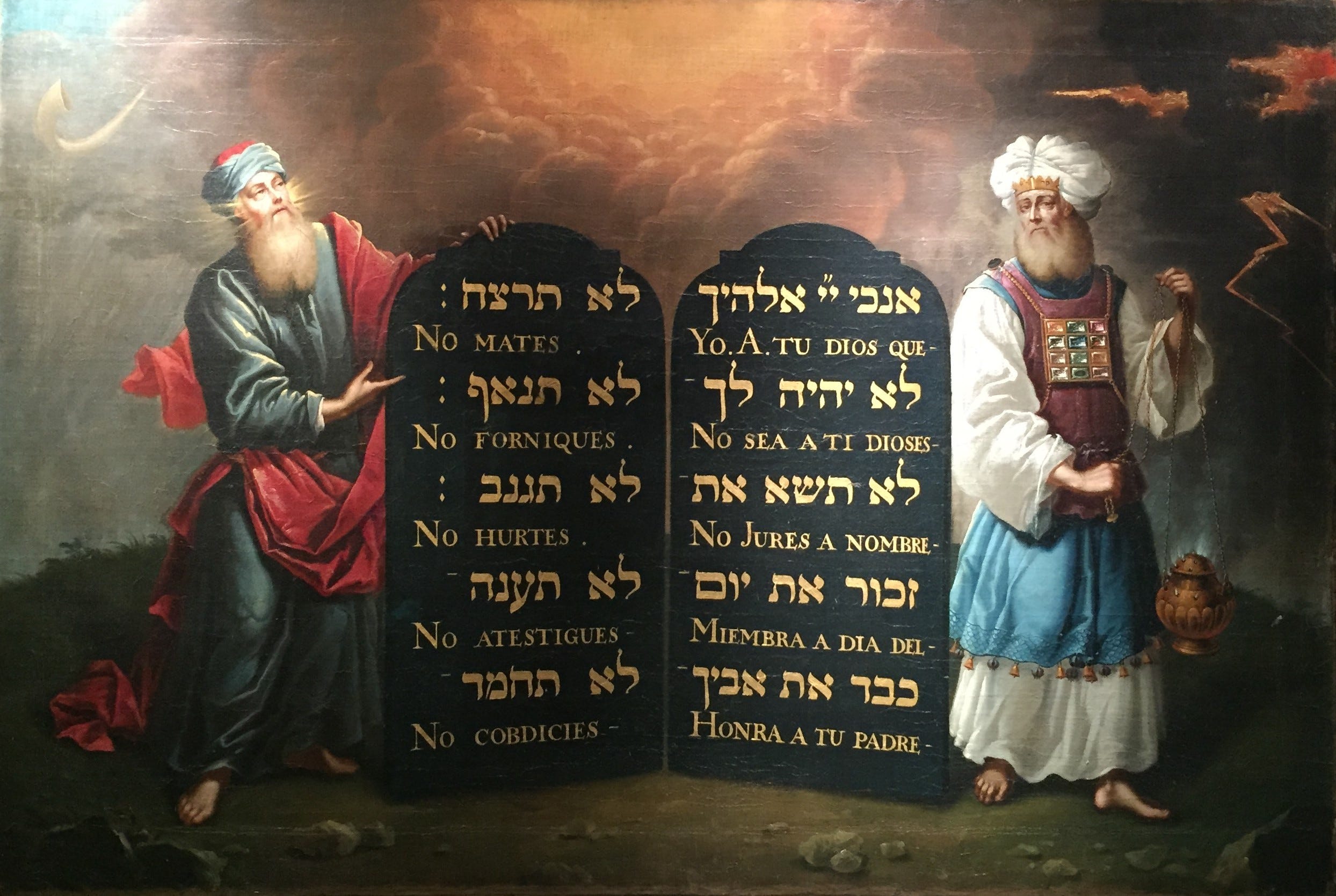
For many people, the Ten Commandments are just an old list of rules, maybe something you learned in Sunday school or saw engraved outside a courthouse.
But the Ten Commandments aren’t just an old list of rules. They’re words God spoke to shape a people, identity-forming words rooted in rescue, not rule-keeping. And when you hear them the way the first audience did, they’re not dry or outdated; they’re full of life, grace, and wisdom for right now.
So we’re going to look at how we got the Ten Commandments and then walk through each one. We will see what they meant to Israel, what they reveal about God, and why they still matter for us to understand today…
Let’s start with how we got them.
How We Got The Ten Commandments
The story begins in Exodus 20. Israel had just been rescued from slavery in Egypt, led through the Red Sea, and brought to Mount Sinai. Three months into their freedom, God calls Moses up the mountain. And what He speaks isn’t just for Moses, it’s for the whole nation gathered below. These Ten Commandments were words straight from God that shaped Israel’s identity as His people.
In fact, the Bible calls them the “Ten Words” (Exodus 34:28; Deut. 4:13). Which is significant, In the ancient world, kings often established treaties with their people: “Here’s who I am, here’s what I’ve done for you, and here’s what it means to live under my rule.”
That’s the framework we see here: God reminds Israel, “I am the Lord your God, who brought you out of Egypt, out of the land of slavery” (Exodus 20:2). It's grace before rules... The commandments aren’t a way to earn God’s favor, they’re a response to what He’s already done.
The Israelites would have recognized this immediately. In their world, laws were always tied to the character of the king. These weren’t arbitrary rules; they were a revelation of God’s heart. The commandments show us what life in covenant with God looks like, not as a burden, but as a blueprint for flourishing.
Their purpose was to set Israel apart. Every other nation had gods who demanded rituals, sacrifices, even child offerings. But Israel’s God wasn’t just another deity to appease, He was the Creator who rescued them. His commandments reflected His holiness, justice, and love.
In short: The Ten Commandments weren’t about keeping people in line. They were about forming a people… people who would bear God’s name, reflect His character, and shine as a light to the nations.
The Ten Commandments Explained
So if these “Ten Words” are God’s blueprint for life with Him, what do they actually say? Let’s walk through them and see what they mean…
1st Commandment: “You shall have no other gods before me” (Exodus 20:3)
This first commandment sets the foundation: Israel was to give their loyalty to God alone. In Egypt they had seen a pantheon of gods, each demanding rituals and sacrifices. Now, freshly delivered God is reminding them that he is the one true God.
This isn’t insecurity on God’s part. It’s reality. Only He had rescued them. Only He was the Creator. This isn’t just about theological correctness, it’s about exclusive allegiance. In covenant terms, it’s like marriage vows: no rivals, no divided love.
The reality is our hearts are drawn to idolatry. That was true then and it’s true now. Israel’s temptation was to hedge their bets with Baal or Asherah. Ours might be money, success, relationships, or politics. We may not bow at physical altars, but we often trust created things to give us the security only God can provide.
The first commandment calls us to re-center our hearts: Who or what do I rely on most? Where does my trust really rest? For Israel, it was the choice between God and the idols of the nations. For us, it’s the same: worship the God who saves, or the gods that cannot.
2nd Commandment: “You shall not make for yourself an image…” (Exodus 20:4–6)
At first glance, this might sound like a repeat of the first commandment, no idols, no false gods. But it goes deeper. In the ancient world, images were thought to contain or localize a deity’s presence. A carved figure of Baal or a golden calf wasn’t just art, it was a way of saying, “Here’s where our god lives. Here’s what he looks like. Here’s how we can control him.”
But God refuses to be reduced or domesticated. He is the Creator of heaven and earth. His people don’t need to make images of Him because He has already made images of Himself in us (Genesis 1:26–27). To carve wood or stone to represent God is not only insulting, it’s redundant. Humans are the living, breathing reflections of God on earth.
Notice too, this commandment comes with a warning: “I, the Lord your God, am a jealous God…” Jealousy here isn’t petty; it’s relational. Think covenant again, it’s the protective passion of a spouse who won’t share their beloved. God’s jealousy is His love refusing to let His people give themselves away to lifeless idols.
And here’s the kicker: worship always shapes us. As Psalm 115 says, those who make idols “become like them.” If we center our lives on money, image, or success, we end up hollow and restless. But if we behold the living God, we’re shaped into His likeness… whole, alive, free.
The second commandment, then, is about protecting intimacy. God wants His people to know Him as He truly is, not as a statue they can carry around. The call is clear: don’t shrink God down; let Him enlarge your life.
3rd Commandment: “You shall not take the name of the LORD your God in vain” (Exodus 20:7)
Most of us grew up hearing this as don’t say OMG… And sure, profanity with God’s name is part of it. But the Hebrew word for “take” is broader, it literally means to carry or bear. This isn’t just about what comes out of your mouth; it’s about how you live while carrying God’s name.
Think of Israel at Sinai. God had just claimed them as His people, His representatives to the nations. To “bear His name in vain” would mean to misrepresent Him, by making false oaths, using His name for personal gain, or living in a way that contradicts His character. This command is less about vocabulary and more about integrity.
Carmen Joy Imes, in her book Bearing God’s Name, says: “The command is not a prohibition of swearing, but a commission to live faithfully as God’s covenant people.”
That means every Israelite carried God’s reputation wherever they went.
And the same is true for us. Paul says in 2 Corinthians 5 we are “ambassadors for Christ.” We wear His name. To use it flippantly, manipulate with it, or live in a way that dishonors Him is to break this word.
So yes, watch your language. But more than that, watch your life. This commandment is about representing the King of the universe with truth and reverence.
4th Commandment: “Remember the Sabbath day, to keep it holy” (Exodus 20:8–11)
For Israel, this commandment would have been shocking. They had just spent 400 years in Egypt as slaves and slaves don’t take vacations; they don’t get rest. Their entire identity was built on production: more bricks, less straw, constant labor. Then God speaks a new word over them: “Rest.”
The Sabbath wasn’t just about taking a break; it was about trust. In Exodus 20 the reason ties back to creation, God Himself rested on the seventh day. In Deuteronomy 5 the reason ties back to redemption, God freed Israel from slavery, so they must give rest to everyone in their community: servants, foreigners, even animals. The Sabbath is both an imitation of God and participation in freedom.
The original audience would have heard this as incredibly good news: your worth is not in what you produce. And that’s still true for us. The Sabbath whispers, “You can stop. You can rest. Because God has already done the work of rescue.”
So the fourth commandment isn’t just a rule to follow. It’s a gift to receive, a weekly reminder that God is Creator, God is Redeemer, and we are His free people.
5th Commandment: “Honor your father and your mother…” (Exodus 20:12)
At first glance, this feels like a children’s rule, obey mom and dad. But the Hebrew word for “honor” means to give weight, to treat someone as significant. And in the context of ancient Israel, this was primarily directed toward adult children. Honoring parents meant caring for them in old age, listening to their wisdom, and ensuring the family line and land inheritance remained stable.
This is also the first commandment with a promise: “that your days may be long in the land the Lord your God is giving you.” Dr. Tom Constable notes that Israel’s survival as a nation depended on strong families. If the family broke down, the covenant community itself would collapse. Honoring parents wasn’t about keeping order in the living room; it was about preserving Israel’s future.
But what about when parents are imperfect, or even harmful? Scripture doesn’t call us to enable sin or abuse. Honor doesn’t mean blind obedience. It means treating parents as weighty, acknowledging their role, showing respect where possible, and, when needed, setting wise boundaries. The heart of this word is about cultivating respect, gratitude, and care, not unquestioned submission.
The New Testament carries this forward. Paul quotes this commandment in Ephesians 6, reminding believers that family is still God’s training ground for love. To honor our parents is to recognize God’s design for generational faithfulness.
In short: the fifth commandment calls us to value where we’ve come from, to care for those who cared for us, and to ensure God’s ways are passed on. It’s about stability, gratitude, and faithfulness, because when families thrive, communities flourish.
6th Commandment: “You shall not murder.” (Exodus 20:13)
This word is short in English, but loaded in Hebrew. This verb refers specifically to unlawful killing, not just any taking of life, but premeditated violence, personal vengeance, or negligent acts that destroy another image-bearer of God. The point is clear: human life is sacred because it reflects the God who gave it.
Jesus deepens this command in Matthew 5: anger and contempt are the seeds of murder. The Pharisees could say, “I’ve never killed anyone,” but Jesus presses deeper: Have you spoken words that cut someone down? Have you treated them as if their life didn’t matter?
The sixth commandment insists that how we view others reveals how we view God. To protect life is to honor God; to diminish life is to rebel against Him.
7th Commandment: “You shall not commit adultery.” (Exodus 20:14)
Adultery in Israel wasn’t just personal; it threatened the entire covenant community. Marriage was the bedrock of family, inheritance, and social stability. To betray that bond fractured trust, destabilized households, and distorted the picture of God’s own covenant love.
Prophets like Hosea later used adultery as a metaphor for Israel’s unfaithfulness to Yahweh. To be unfaithful in marriage was to misrepresent God’s faithfulness. This reminds us that this command is about more than sex; it’s about the wholeness of covenant loyalty.
Jesus again takes it deeper: lust itself objectifies and consumes another, treating them as an object rather than a covenant partner. Brennan Manning once said, “The gospel is absurd unless we believe that He lived, died, and rose again with but one purpose in mind: to make brand-new creation.”
That includes our sexuality, restored and re-centered on covenant love. Faithfulness in marriage becomes a living witness: the God who keeps His promises calls His people to do the same.
8th Commandment: “You shall not steal.” (Exodus 20:15)
In an agrarian society, theft wasn’t petty, it could mean the loss of livelihood or survival. Taking livestock, tools, or land was more than property crime; it was an assault on a neighbor’s ability to live. Israel’s law expanded this to include kidnapping, unjust business practices, and withholding wages.
The principle is simple: God’s people live by integrity and generosity. Stealing says, “I don’t trust God to provide, so I’ll take from you.” Generosity says, “God has given me enough, and I’ll share.” Theft isn’t just about possessions; it’s about trusting in God’s provision.
For us, theft might look like cutting corners at work, pirating digital media, plagiarizing ideas, or hoarding resources. Paul reframes it in Ephesians 4:28: “Anyone who has been stealing must steal no longer, but must work, doing something useful with their own hands, that they may have something to share with those in need.”
The eighth commandment isn’t just “don’t steal”, its about being generous.
9th Commandment: “You shall not bear false witness against your neighbor.” (Exodus 20:16)
The original context is legal standing in court. False testimony could destroy a neighbor’s life or land. In a society without modern forensic evidence, eyewitness testimony carried enormous weight. To lie under oath wasn’t just dishonesty; it was injustice.
But the principle goes beyond the courtroom. All throughout the Old Testament, God calls His people to truth-telling because He is truth. To slander, misrepresent, or deceive corrodes community. This ninth word isn’t just about avoiding lies; it’s about building trust.
Jesus identifies Himself as “the Truth.” Paul tells us to “speak the truth in love” (Eph 4:15). Our words either build up or tear down.
In a culture awash with spin and half-truths, the ninth commandment calls us back to integrity, words that align with reality and love our neighbor.
10th Commandment: “You shall not covet…” (Exodus 20:17)
The final word is unique, it moves from actions to desires. Coveting is craving your neighbor’s life: their spouse, house, workers, or animals. It corrodes community because it turns neighbors into competitors. It says, “What God gave me isn’t enough.”
Paul reflects on this in Romans 7: he thought he was blameless until he realized coveting exposed his heart. Desire itself can be sinful when it warps into envy and discontent. As C.S. Lewis observed, “We are far too easily pleased.” We grasp at lesser goods and miss the greater joy of God Himself.
The tenth commandment isn’t just a prohibition; it’s an invitation to contentment. Gratitude, generosity, and joy break coveting’s grip. This word drives us inward, asking not just what we do, but what we want. God doesn’t just want obedience in action; He wants transformation in desire.
So that’s the Ten Commandments, not just rules carved in stone, but living words that revealed God’s heart to Israel. They were never meant to be a burden, but a blueprint for flourishing, a way of forming a people who would carry His name and shine His character to the world.